





Remote Online Notarization (RON) has proven its value beyond the closing of last resort. It has proven its value in day-to-day lending, and I believe, sooner than we think, a lender’s ability to offer a well-run fully digital closing will be considered a necessity.
“RON is complex, but it doesn't have to be complicated”. This is the idea I come back to when lenders ask how to make RON work. The real considerations behind every successful closing only need a thoughtful strategy and the right implementation; RON’s complexities become manageable and the experience can still feel simple, supported, and convenient for both lenders and borrowers.
RON Today: High Interest with Adoption Slowly Following
RON has incredible momentum with legislation being passed in 46 states and D.C. Yet, at the same time, broader RON closing adoption shows a gap between offering a fully digital option and making it part of everyday lending.
In Snapdocs’ 2025 survey of 100 lending institutions, 90% offered digital closings, but only 14% of lenders with eClosing technology reached an 80% threshold for closing their loans digitally. This despite almost 80% of lenders who use digital closing technology reporting greater staff efficiency, faster closings, and fewer closing-document errors after having made the switch.
eNote growth is helping, too. MERS registrations show eNote activity rose 6.7% year-over-year in September 2026, and eNotes’ share of registrations grew from 12.77% to 14.47%. As lenders build eNote, eVault, and digital delivery processes, they gain experience that can support RON adoption.
Additionally, more lenders are finding creative ways to use RON beyond purchase closings. Transactions such as HELOCs and loan modifications can be a natural fit where the package is smaller, involves fewer parties, and the lender controls the process end to end. These transactions can also avoid the eNote hurdle when a lender chooses to portfolio the loan or when the transaction doesn’t require a Note altogether.
And this timing matters: Freddie Mac’s 30-year mortgage rate was 7.18% on November 5, 2026. ICE reported second-lien lending reached its strongest first-quarter level in nearly two decades as homeowners tapped equity while keeping low-rate first mortgages. OCC-reported servicers completed 7,349 loan modifications in Q2 2026, up 16.5% from the prior quarter. These examples show how RON can bring efficiency and convenience, remaining useful while weathering market changes.
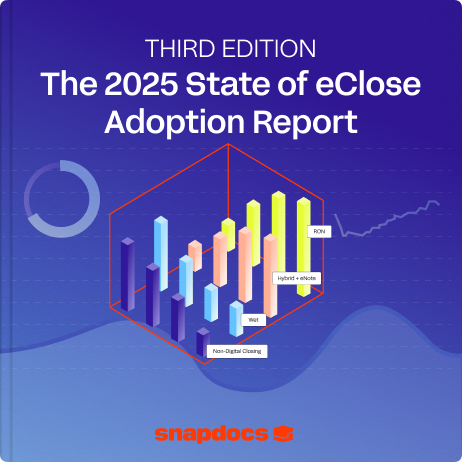
The data supports a RON-forward approach as well as RON’s value as reflected in lender interest, operation benefits, and borrower experience. In Snapdocs’ 2025 State of eClose Adoption Report, the share of lenders planning to offer RON rose from 19% in 2023 to 40% in 2025, a massive 21-percentage-point increase. Among surveyed lenders, 67% prioritized strong security features and 62% prioritized ease of use when selecting an eClosing provider. Separately, Snapdocs’ ROI analysis with Falcon Capital Advisors estimated an average gross benefit of $283 per full RON closing.
Borrower feedback also shows RONs value. In a separate Snapdocs' survey of more than 2,000 recent homebuyers, 72% of those who closed with RON said they were very satisfied, compared with 59% of in-person closers.
Lenders that treat RON as an equal offering with a dedication to going as “e” as possible are already reaping the operational and financial benefits, while borrowers take advantage of having a secure, convenient, and streamlined signing.
Looking ahead: RON as the rule instead of the exception
Beyond the tech, generational demographics are likely to drive the push towards digitization and convenience.
In my RON conversations, I’ll point out that Gen X and Millennials were the last generations to have half of their life without the internet and half with it at their fingertips. Yes, I include myself here as I still make large purchases on larger devices because it feels right, but the generations that follow have largely known mobile access and constant connectivity from the start and default to fully online solutions and services.
As generations of the digital age become the largest real estate transaction blocks, that shift becomes increasingly important as it shapes expectations of fully digital solutions as the norm. Using a simple equal-weighted average of NAR’s 2026 Generation Trends report, the real estate transactions profile is approximately 3% Gen Z, 21% Millennials, 24% Gen X, 48.5% Baby Boomers, and 4% Silent Generation. This shows we’re already on the precipice as Millennials and Gen X create a combined 45%. This future reality is not as far as it seems.
Of course, this doesn't mean we sit idly by as those trends come closer and closer. A great digital solution and experience should work for every generation. People are working longer with an 8.7% increase in the labor force of those 65 and older, they are adopting baseline technology with Pew’s report showing 98-99% internet use for those <64 and still a whopping 89% by those 65+, and online transactions are becoming commonplace regardless of age ranging from 65%-80% in usage.
These trends don’t mean every borrower wants the same experience, but they do show why a fully digital closing option should be accessible, flexible and well supported for people at every life stage as they navigate around work, family, travel, mobility, or distance.
How it Happens: Thoughtful Strategy
RON success starts at the top. When looking to be as digital as possible, leadership aligns operations, compliance, technology, customer support, title, and settlement partners around that goal. We've seen over and over that change management matters just as much as the technology. Building the right strategy and process creates excitement and confidence from within, leading to higher adoption and ongoing RON success. The leap from Hybrid to RON does not need to clear a large chasm. It is a highly manageable step when lenders update processes with intent around eligibility and creating a positive experience for the signer.
For this, eligibility and signer suitability both need attention. A transaction may depend on state law, county recording capabilities, loan type, and investor and underwriter requirements. Then we have the human element. Are my borrowers good candidates? Am I setting them up to have the best possible experience leading up to and on their closing date? This is where the relationships you've built with borrowers and engagement become the main ingredient. Checking these factors early and providing the right guidance for borrowers results in repeatable success and great closing experiences.
Having the Right Partner
How do you know where to begin? At Snapdocs, we work as a co-navigator with lenders, from shaping the RON approach through supporting day-to-day execution. Together, we can set the strategy, define requirements, and lead change across your organization. Snapdocs brings RON expertise, technology, training, and operational support to help lenders conduct a thoughtful and focused launch that applies strategy consistently as adoption grows.
Our managed end-to-end RON service provides Lenders with a fully compliant RON solution, MISMO-compliant workflows, identity verification tools, security controls, and audit-ready records. Our fully integrated solution supports eligibility and signer suitability guidance, document coordination and processing, managed scheduling, notary support, and delivery of a funding-ready package. These capabilities help lenders navigate compliance requirements, prepare the borrowers confidently, and execute RON consistently.
With the right partner and strategy, RON can become a reliable everyday option and a meaningful part of how lenders serve borrowers today and in the years ahead.